19th C Amber Pressed Glass Dish, Wooden Mould, Hay Marks
$650
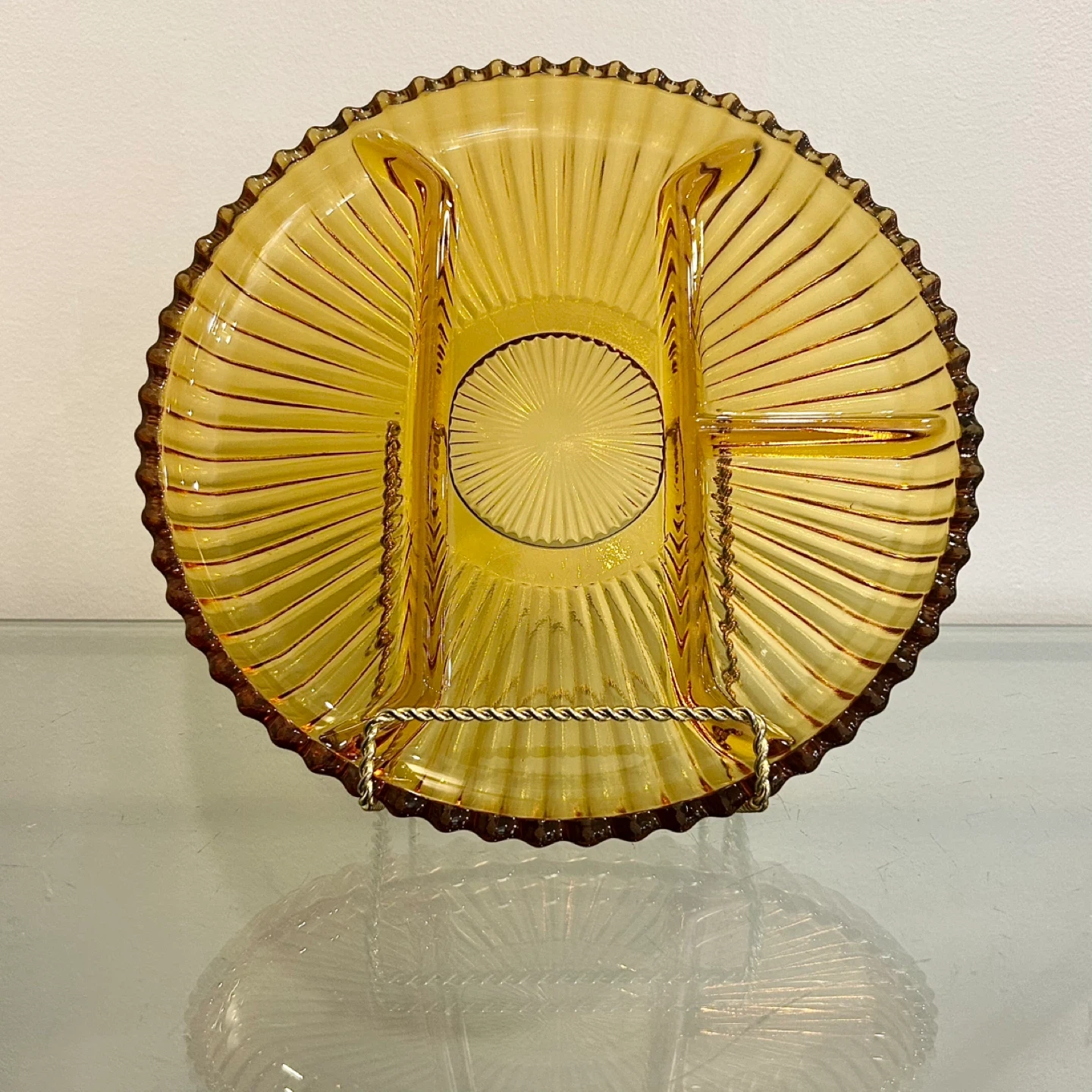
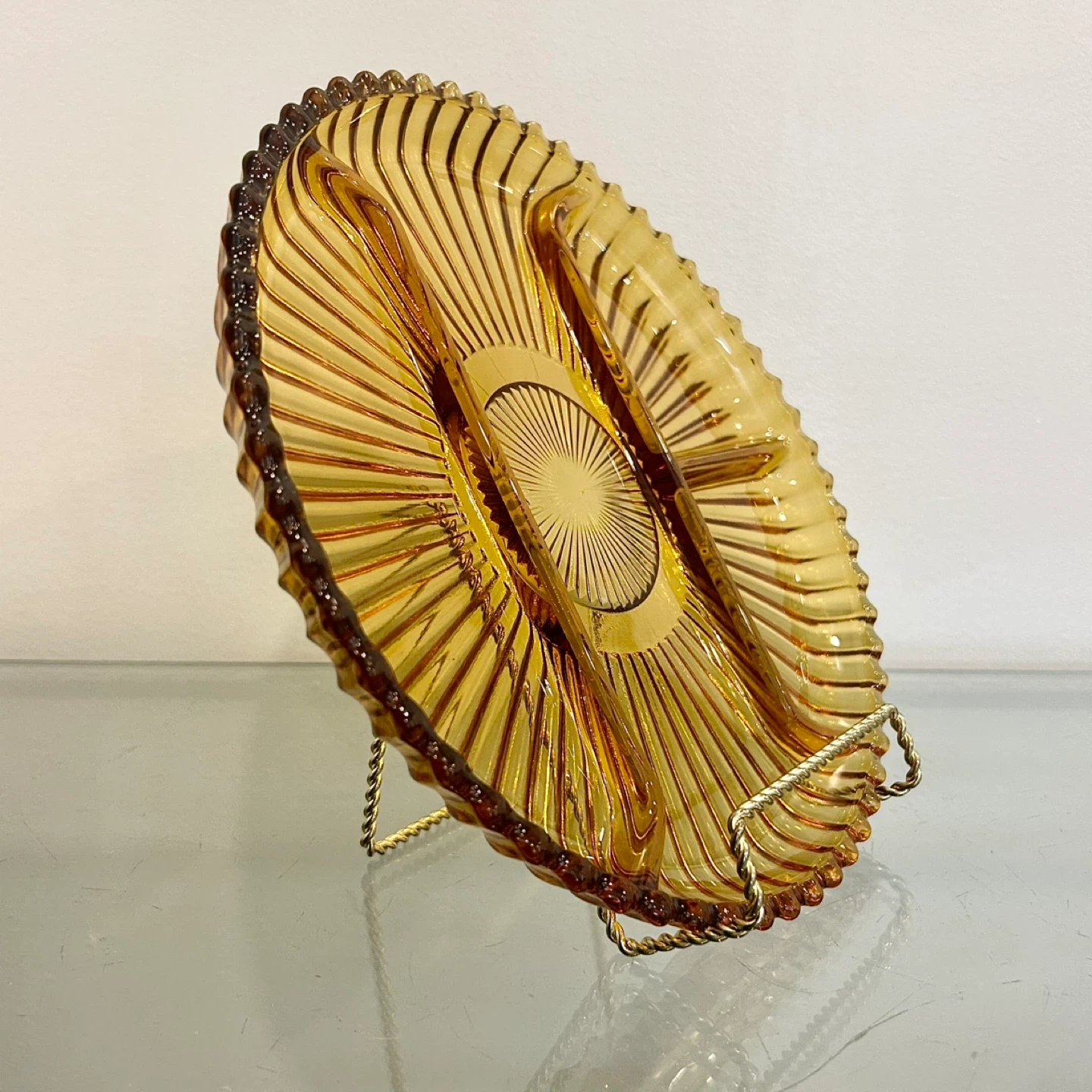
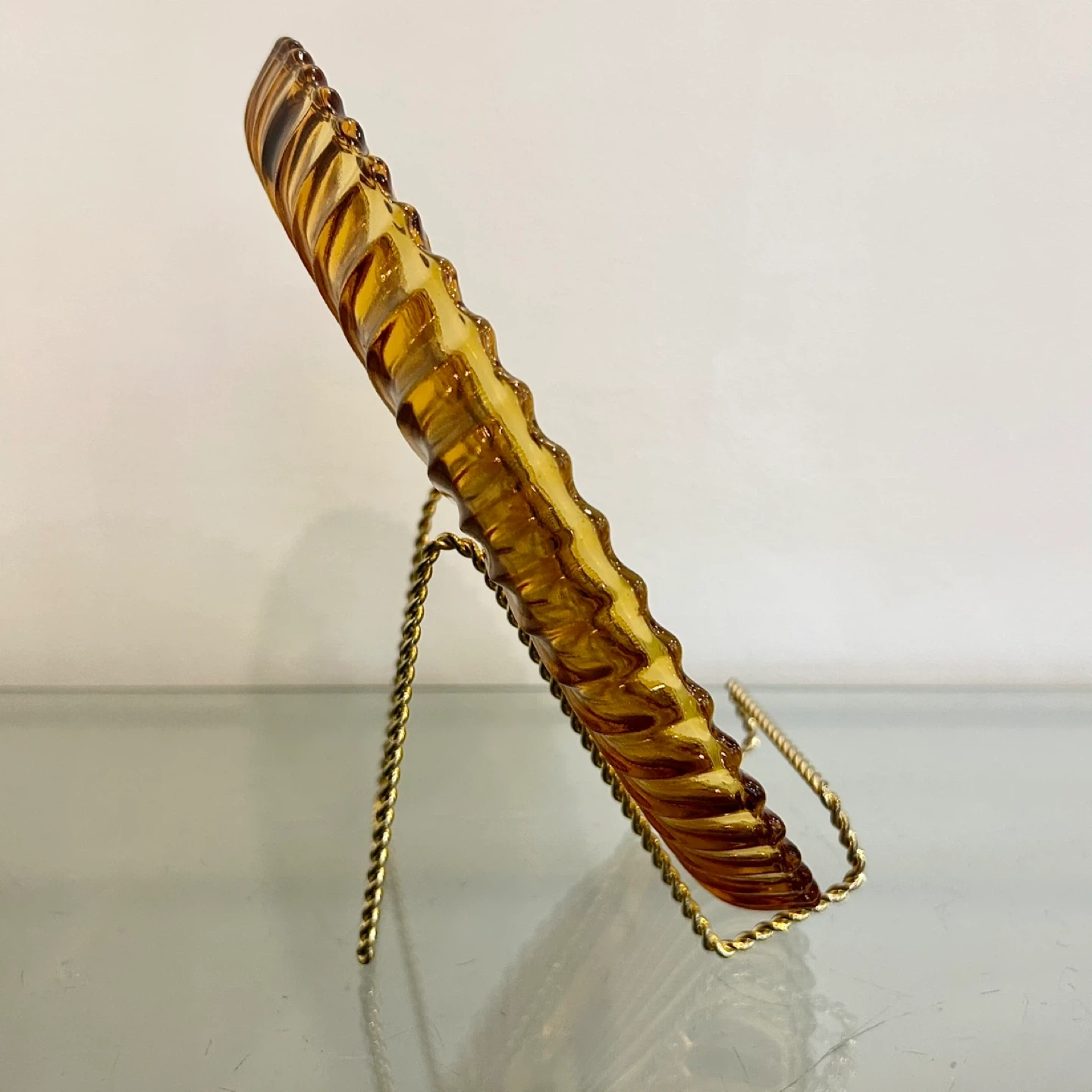
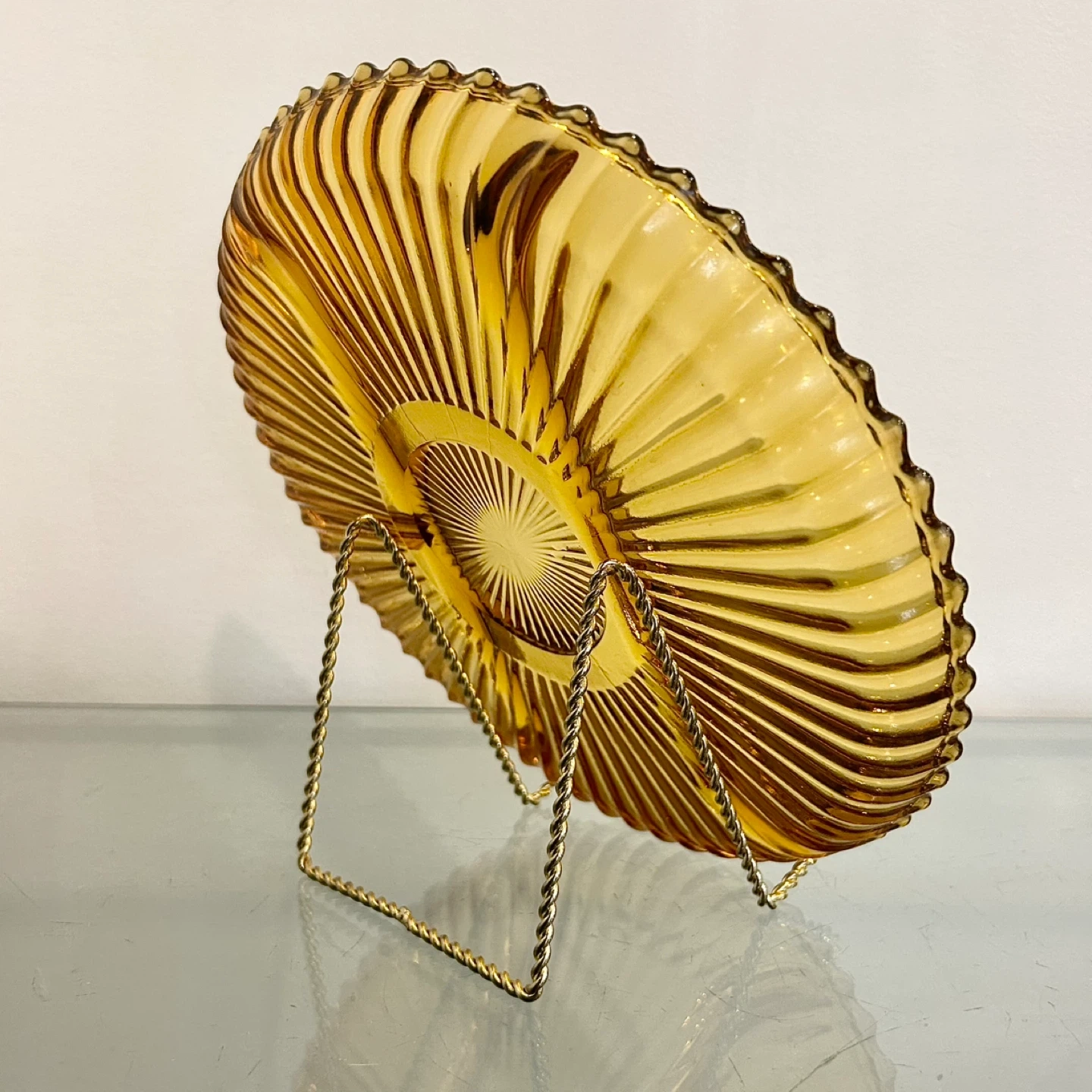
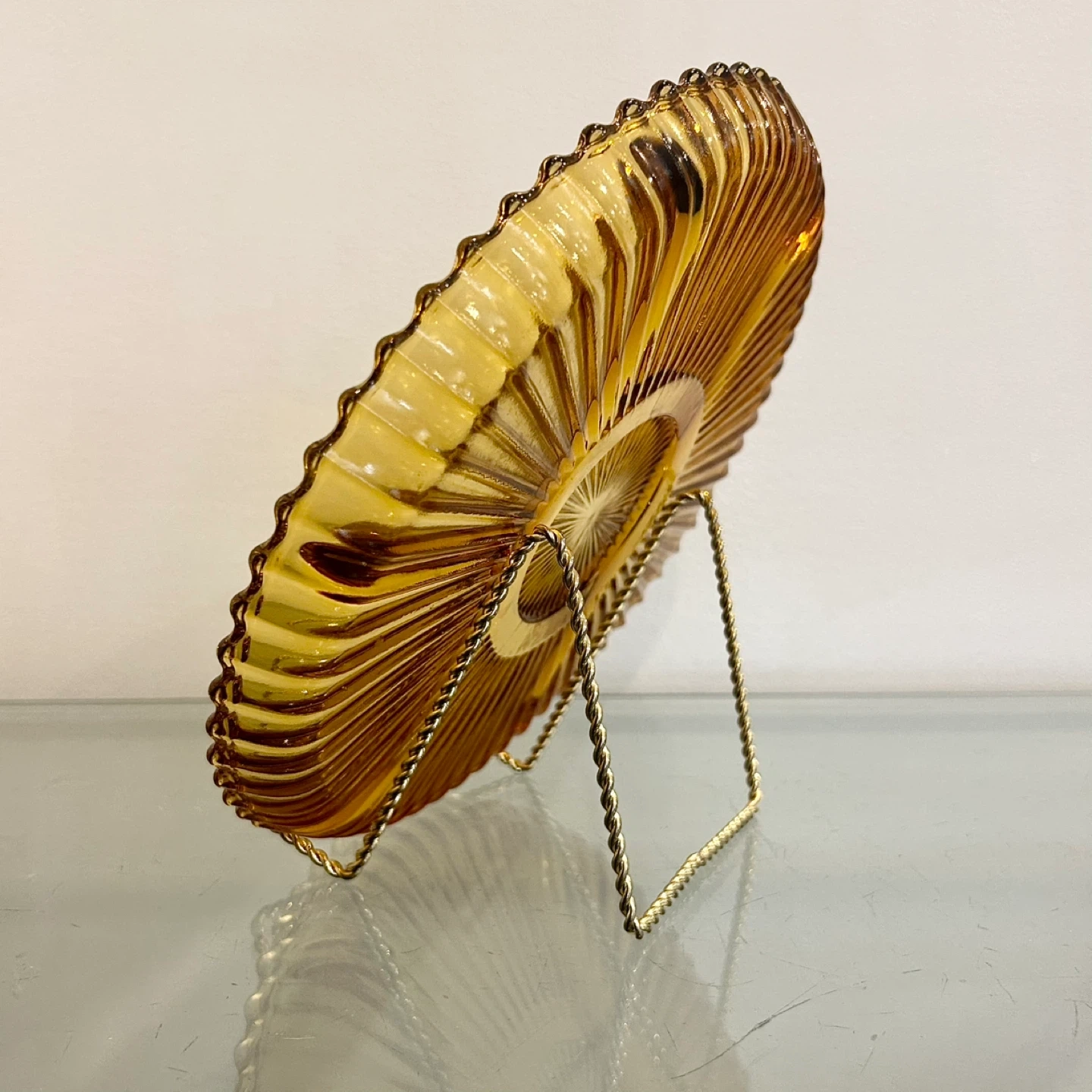
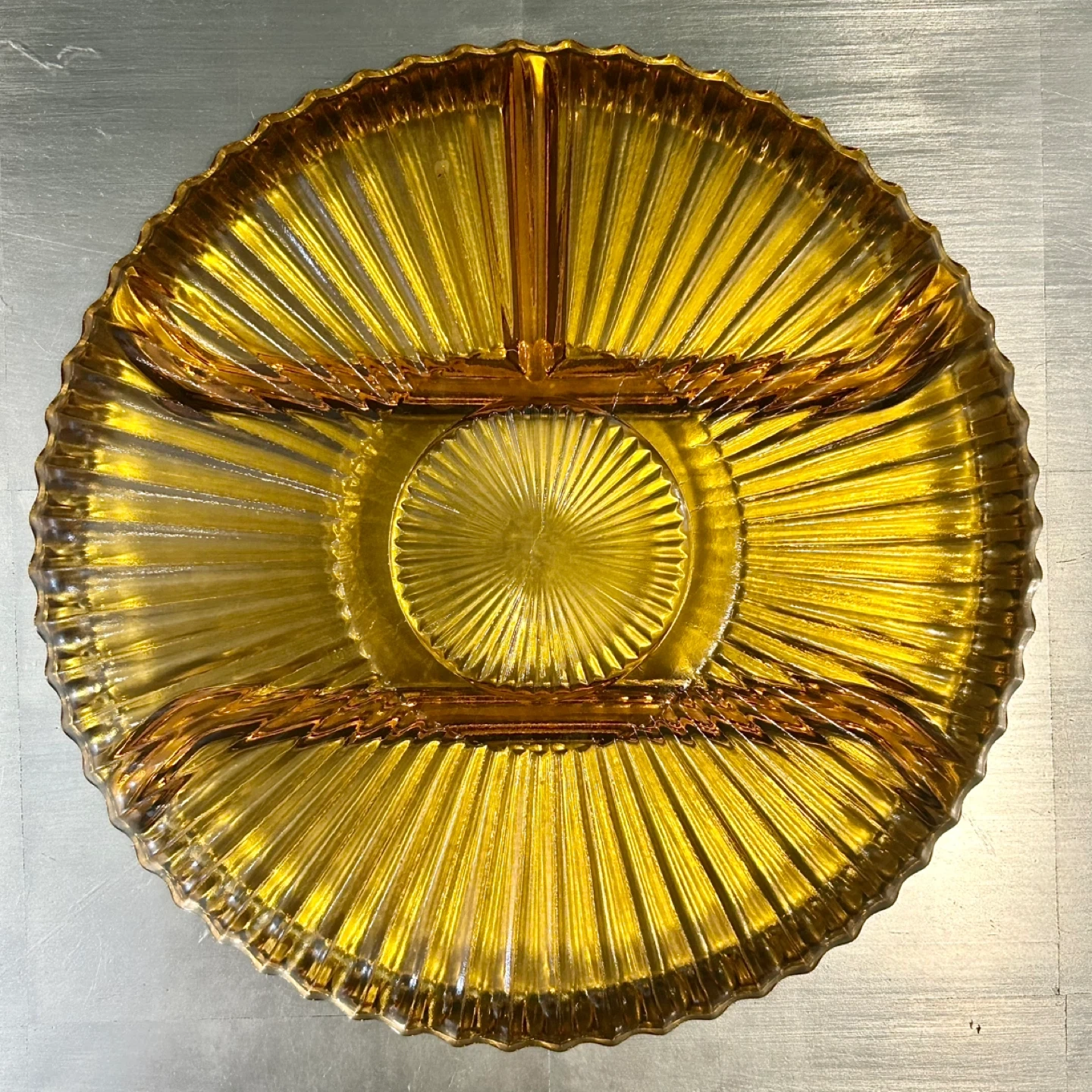
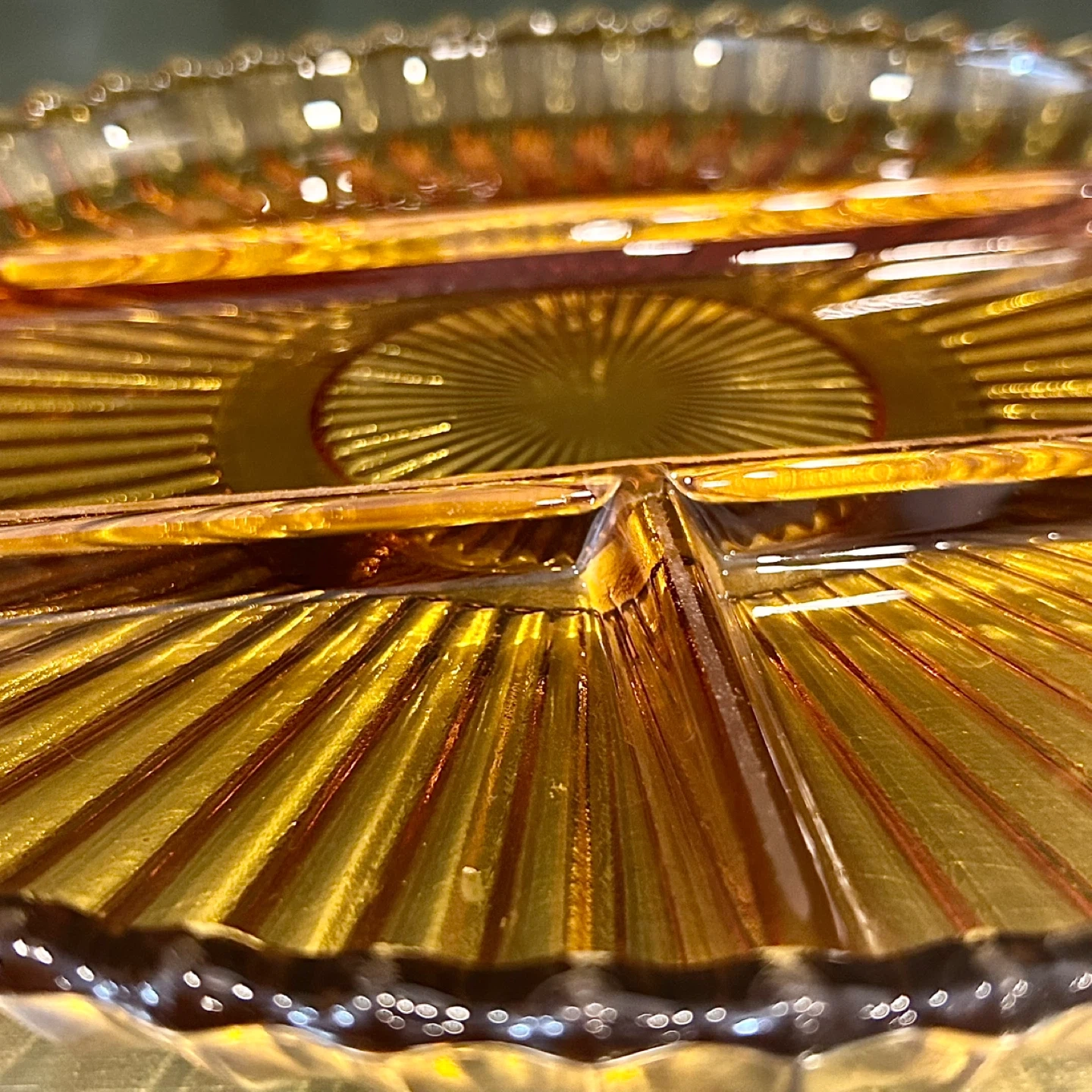
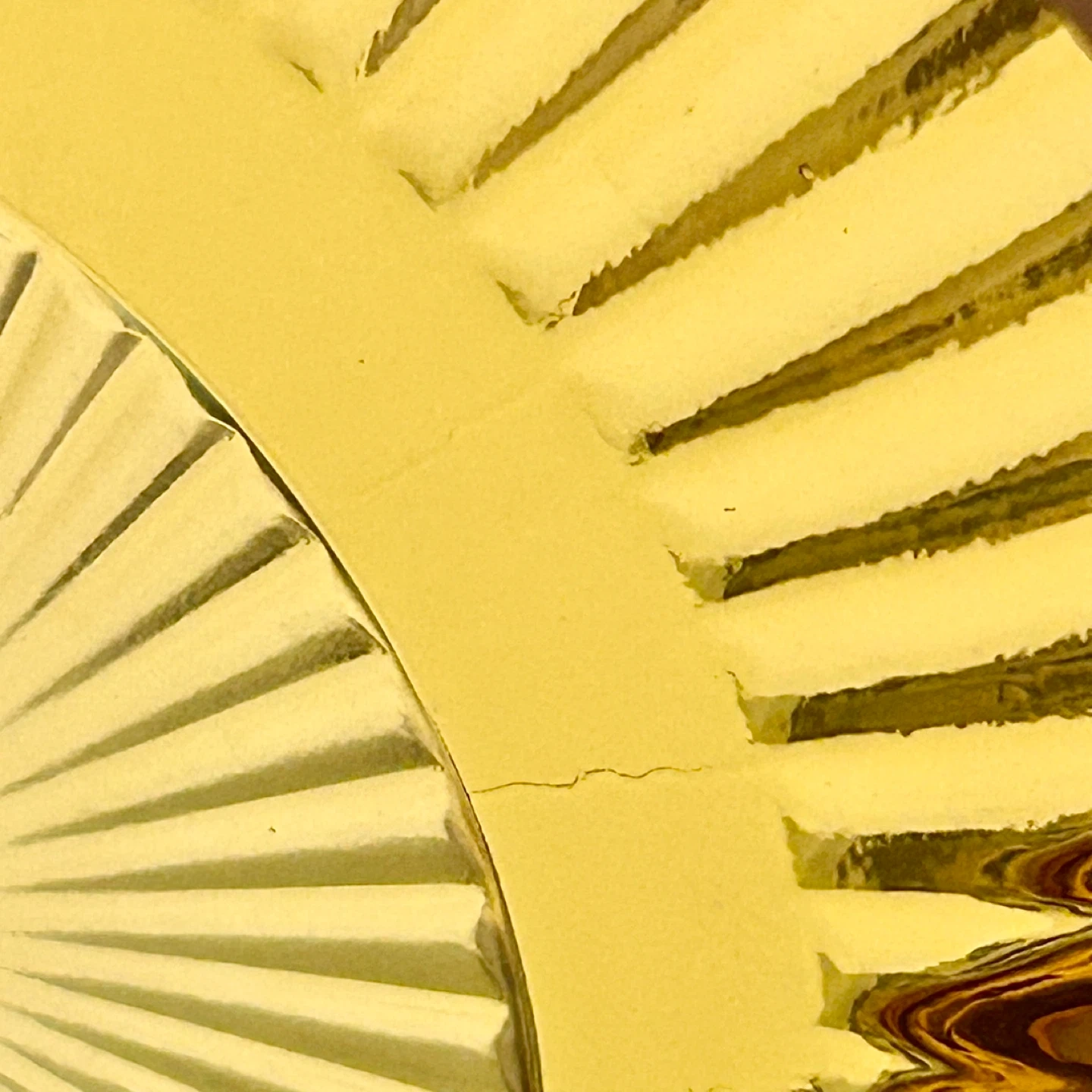
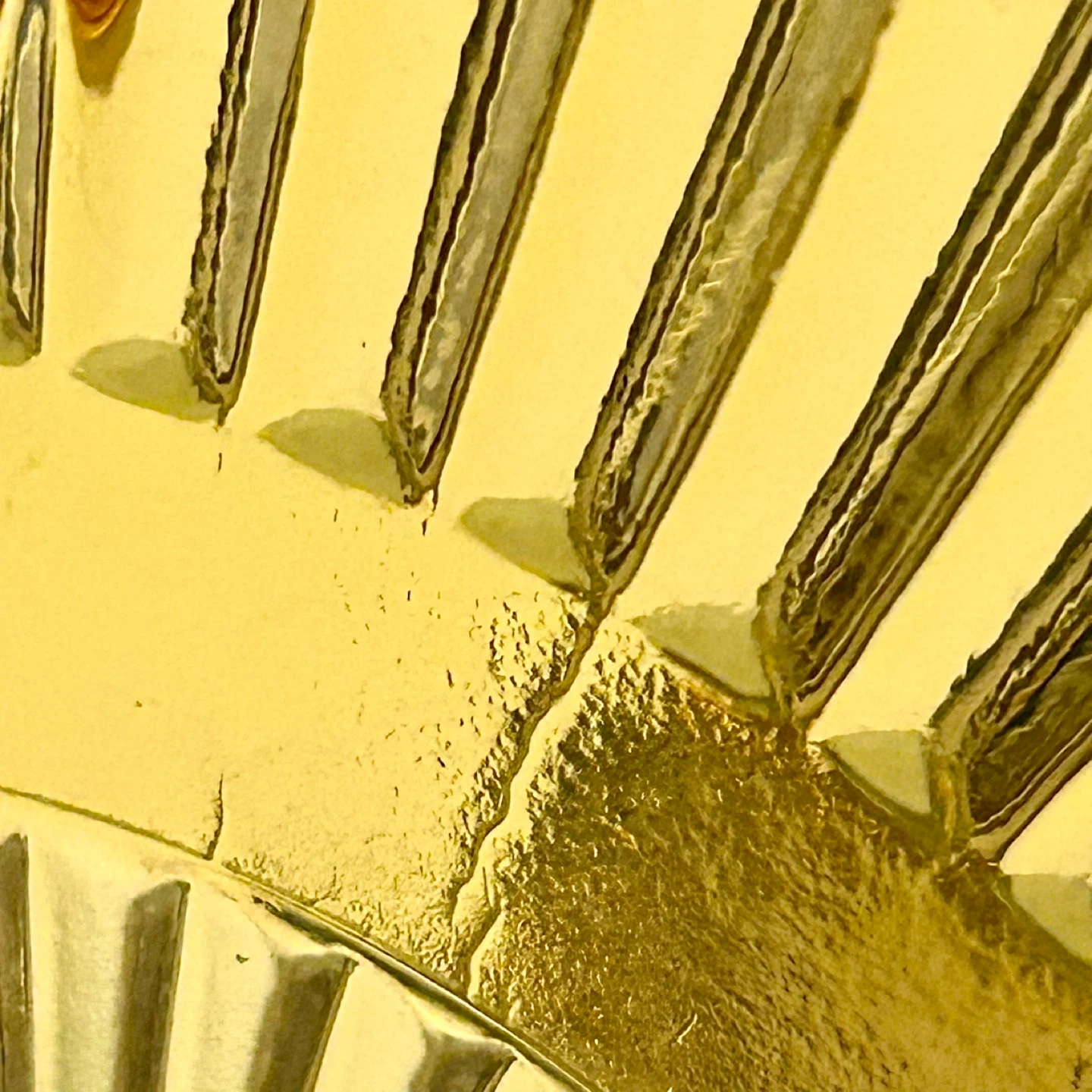
Offered here is an exceptional 19th-century amber pressed glass dish, a highly decorative and technically revealing example of early industrial glassmaking. This piece was pressed in a wooden mould, evidenced by the distinct hay marks and organic striations visible in the close-up photographs—features actively sought by advanced glass collectors.
Material & Technique
• Pressed glass, rich amber coloration
• Formed in a hand-carved wooden mould, not iron
• Pronounced radial ribbing and scalloped rim
• Central sunburst medallion with crisp definition
Hay Marks – What They Are and Why They Matter
The faint linear impressions, fibrous inclusions, and irregular surface texture seen in the macro images are authentic hay marks. These occur when straw or hay was placed inside wooden moulds to:
• prevent molten glass from sticking
• protect the mould from scorching
• extend mould life during repeated pressings
As molten glass was pressed, these organic fibers occasionally left permanent impressions, making each piece subtly unique. Their presence confirms early production, before widespread adoption of iron moulds in the mid-to-late 19th century.
Collectors regard hay marks as evidence of age and originality, not flaws.
Date
Circa 1840–1870
This timeframe aligns with:
• Use of wooden moulds
• Heavy pressed construction
• Deep amber coloration typical of mid-19th-century glass chemistry
Probable Origin
Bohemia (modern Czech Republic) or Northern France
These regions were leading producers of refined pressed glass during this period and are well documented for:
• Wooden mould use
• Amber tablewares
• Architectural and decorative pressed forms
Dimensions
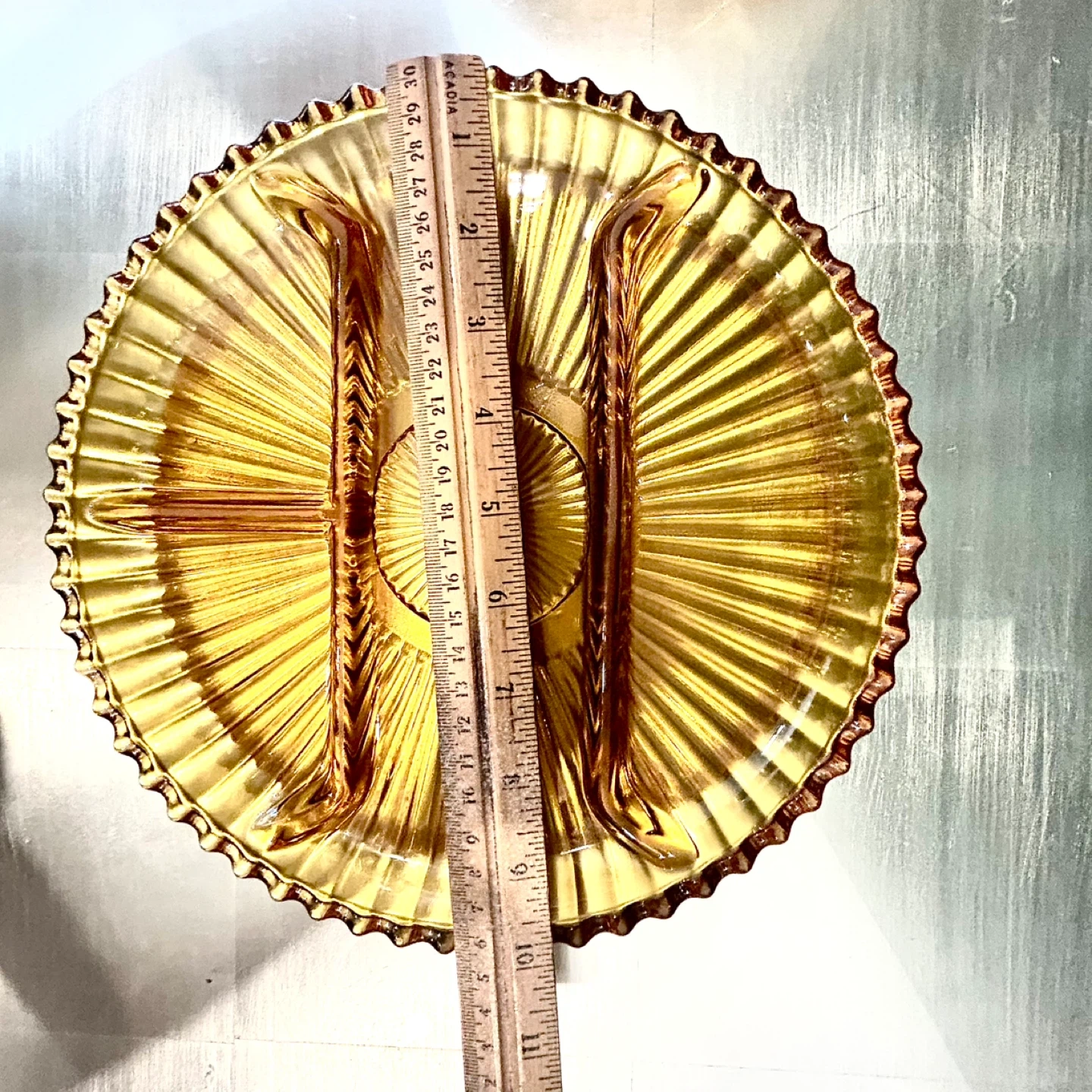
Approx. 12 inches diameter (see ruler photo for confirmation)
Condition
Excellent antique condition:
• No cracks or repairs
• Minor surface wear consistent with age
• All mould details remain sharp
• Color saturation strong and even
Display
Shown on a brass display stand (stand not included unless stated). Displays beautifully as:
• Cabinet piece
• Wall plate
• Study example for early pressed glass techniques
⸻
Collector Notes
Early wooden-mould pressed glass with visible hay marks is increasingly scarce, as most surviving examples show heavy wear or damage. The clarity of this piece’s mould evidence places it firmly in the collector tier, not decorative resale.
WHERE TO MEET
SELLER

verified
GiselleInc
Wallance Emerson
 288
28818 reviews
0 chats0 favorites11 views