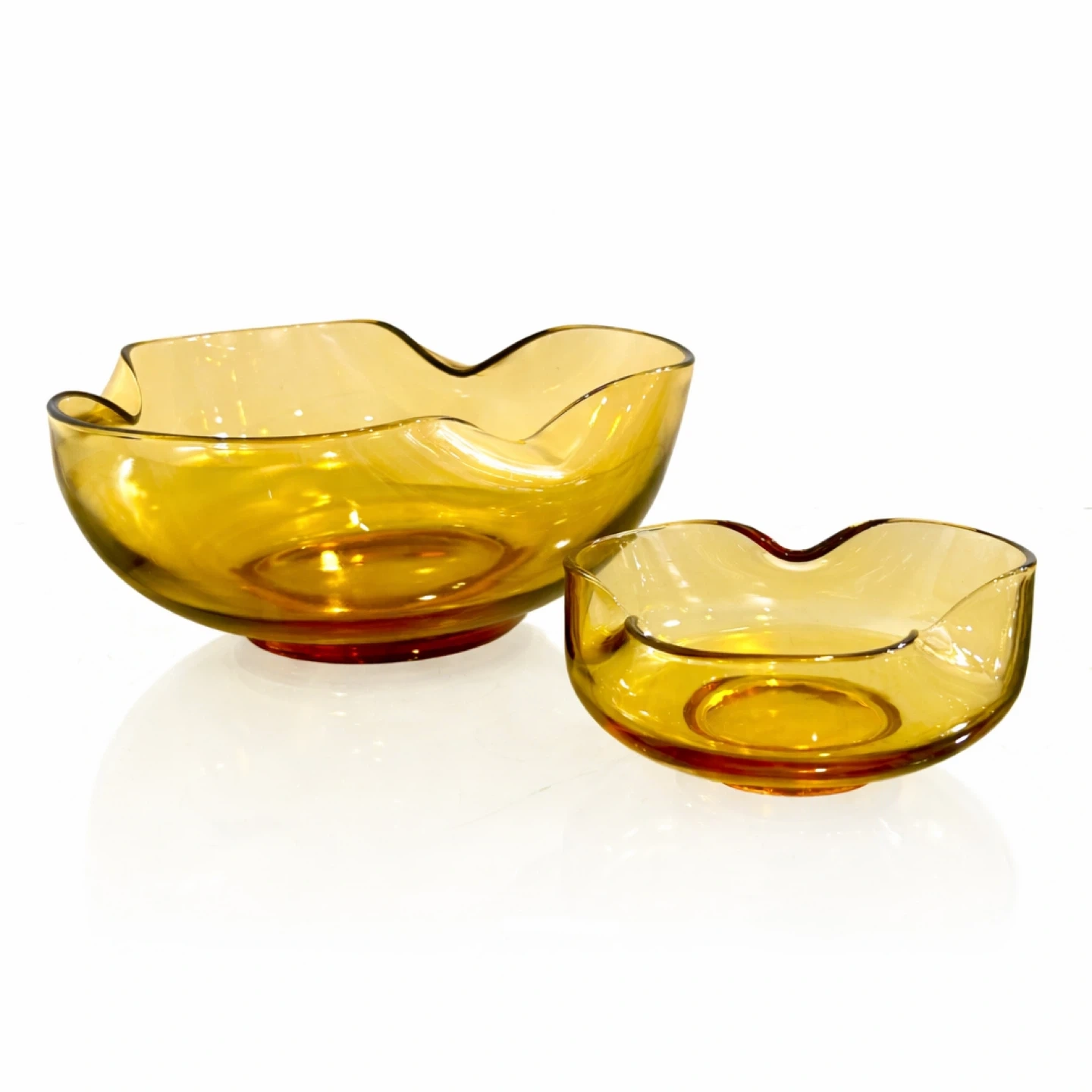
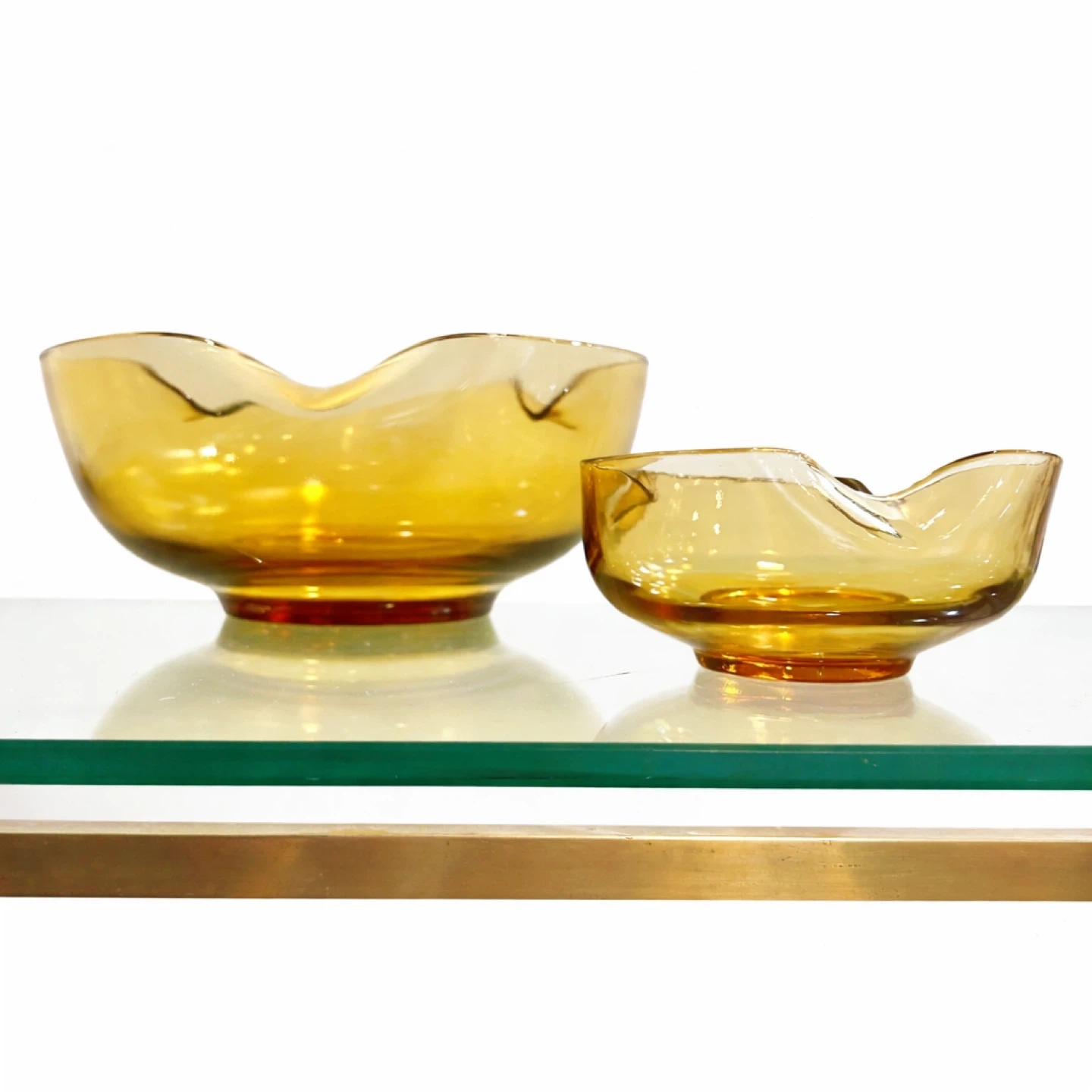
Mid-Century Amber Handkerchief Art Glass Bowls, Set of 2
$1,495
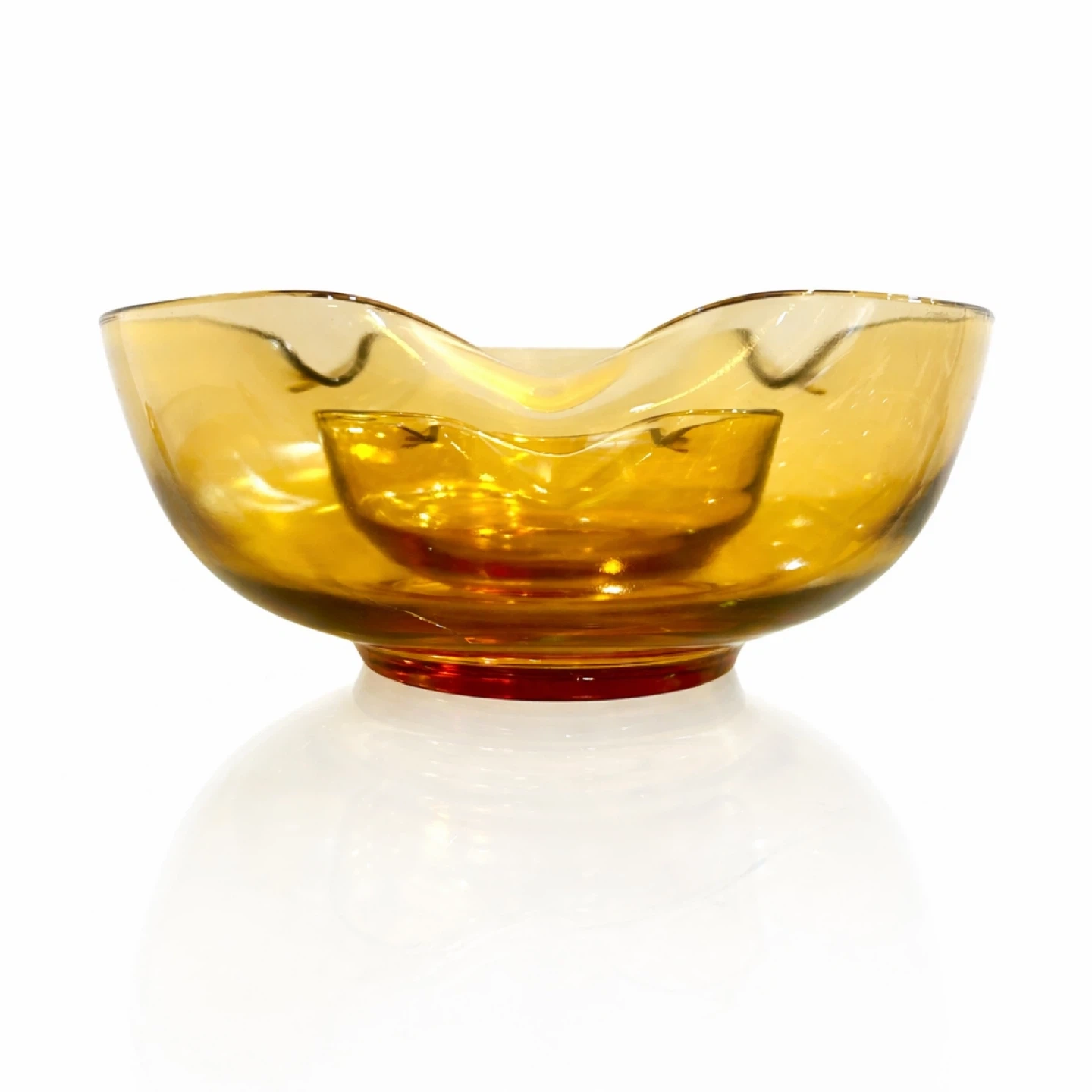
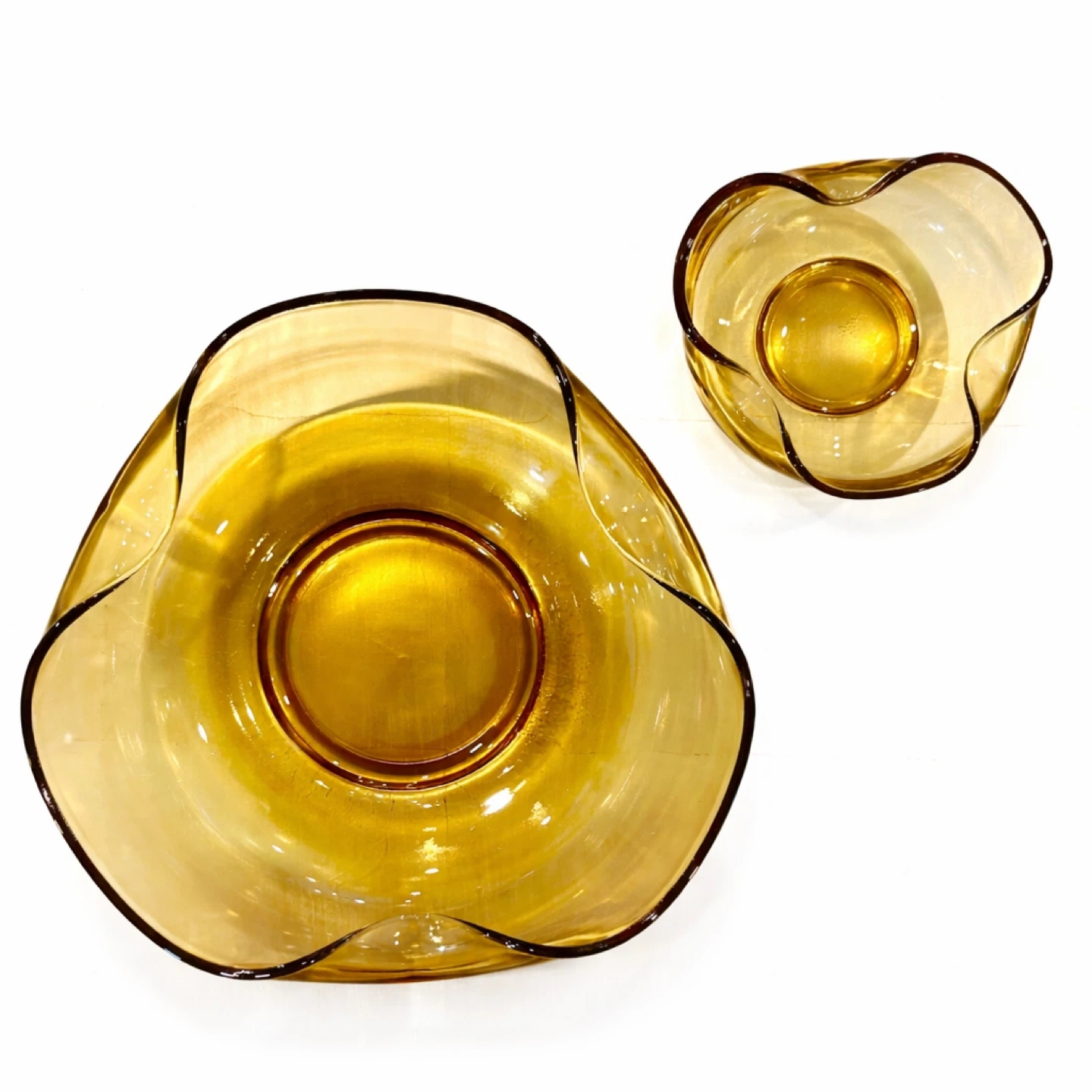
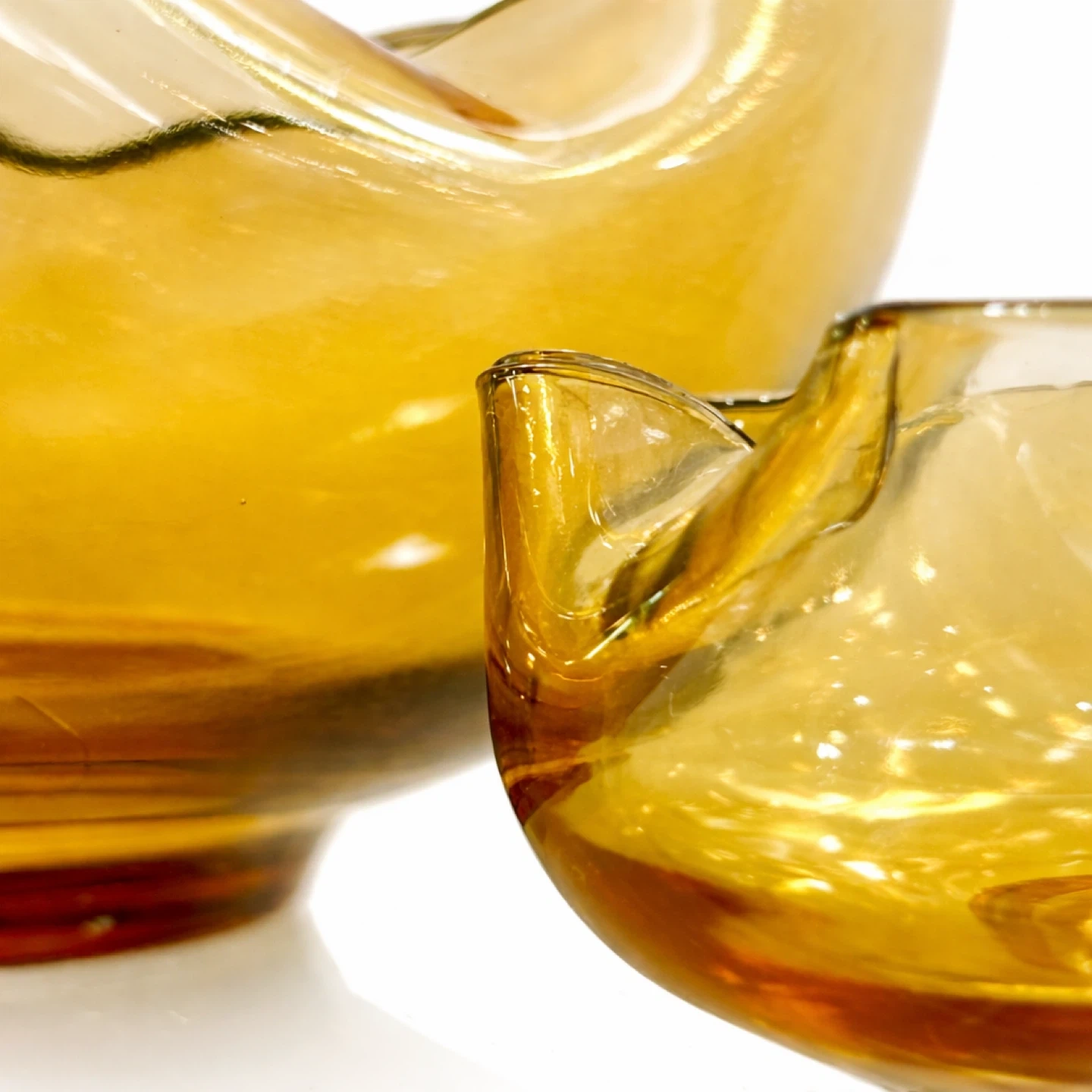
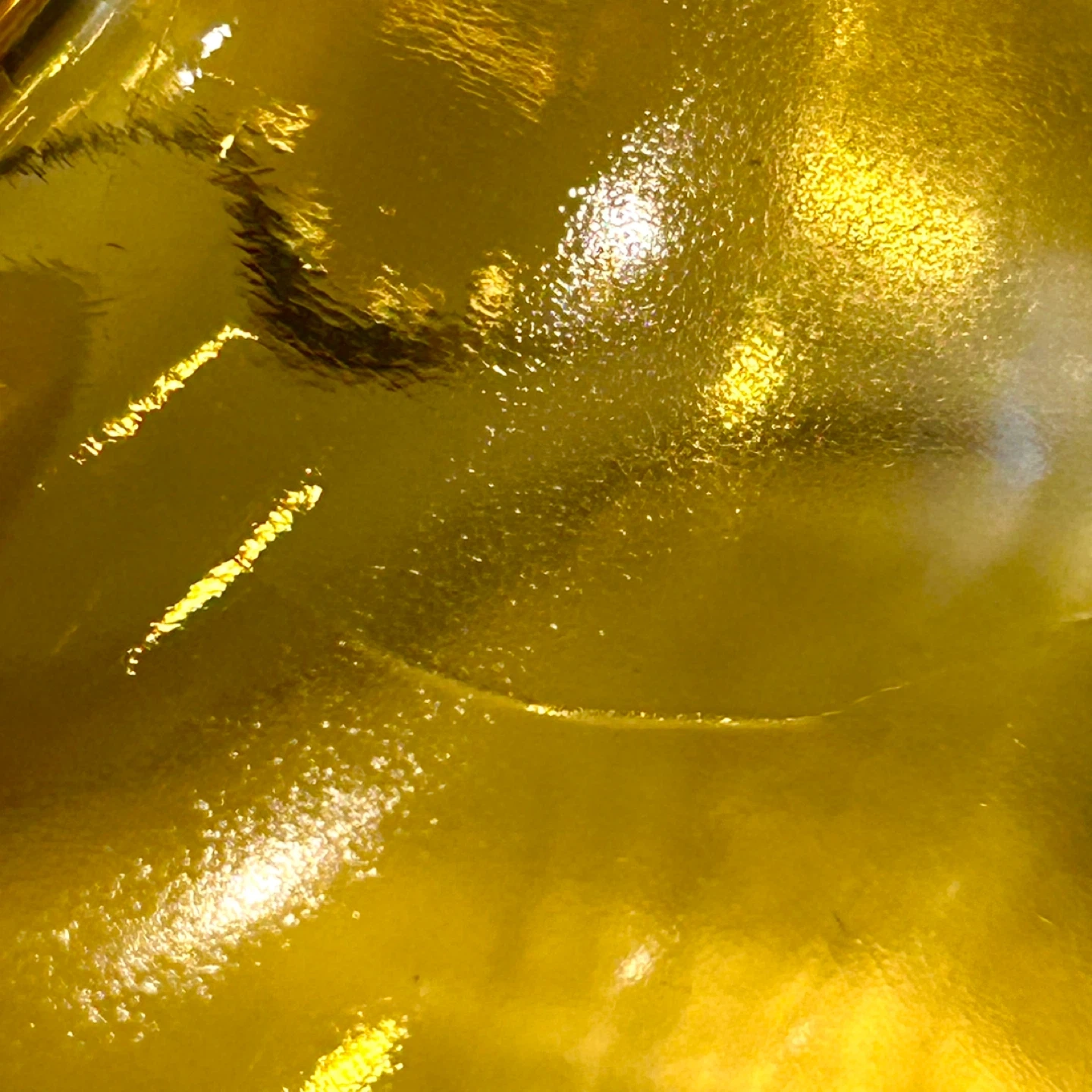
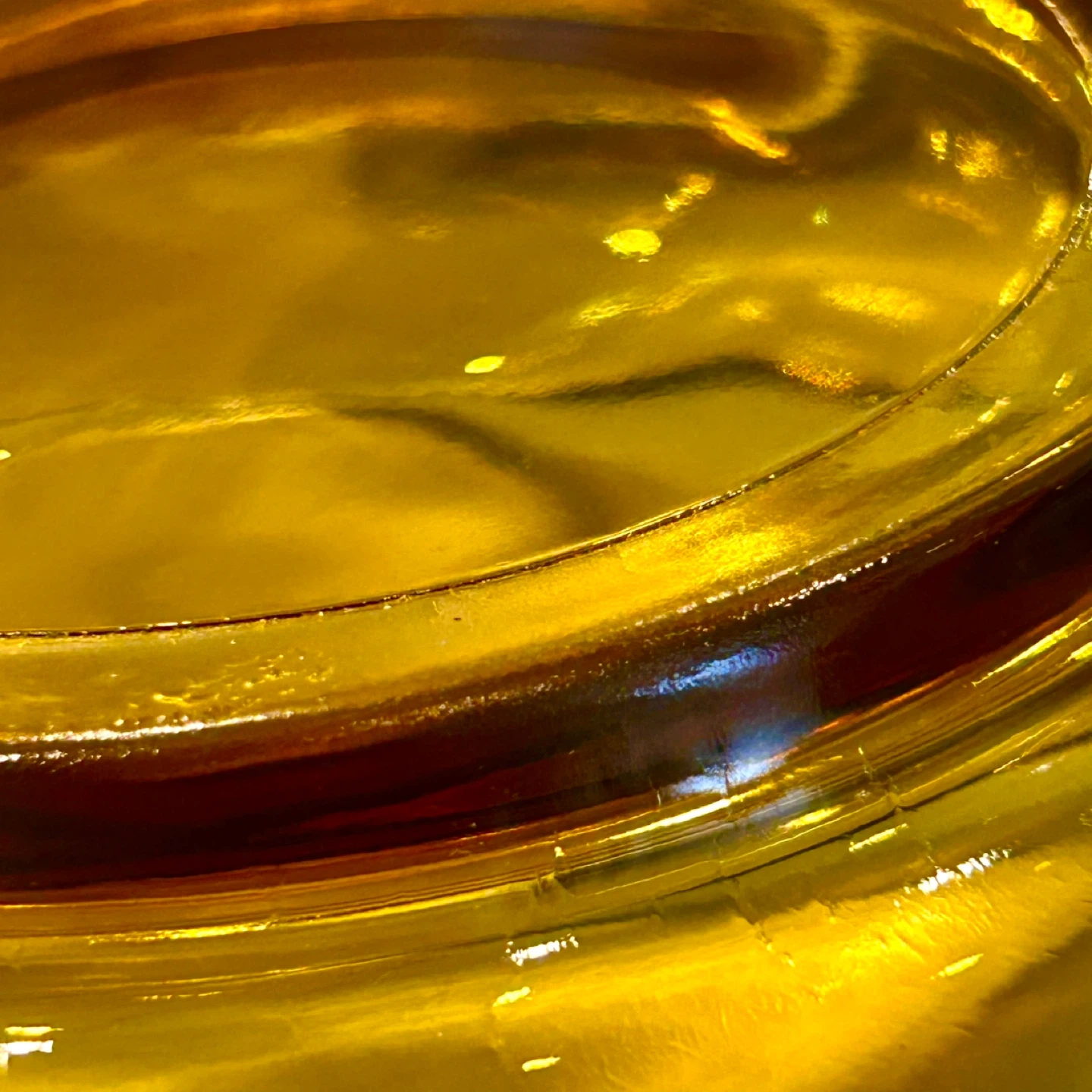
A luminous pair of Mid-Century amber art-glass bowls featuring folded “handkerchief” rims that read like a stylized lotus in profile—sensual, architectural, and unmistakably collectible. Each bowl is formed in thick amber glass with a gently undulating rim created by hot-working the glass at temperature, producing the signature petal silhouette and a beautifully weighted, gallery-worthy presence.
This set exemplifies the European studio-glass vocabulary popular in the 1960s–1970s, when makers explored sculptural tabletop forms designed to catch light and elevate everyday objects into display pieces. The bowls glow from within under daylight and become richly atmospheric under evening lamps—ideal as a centerpiece, console accent, or curated bar/desk object.
Attributed / In the manner of: European studio art glass (Italy/Scandinavia tradition), circa 1960s–1970s. Unmarked.
Construction / technique
Hand-blown (often mold-assisted) art glass with a hot-worked folded rim; annealed; base finished smooth/polished.
Dimensions
• Large: 9 in diameter × 3.75 in H
• Small: 4.5 in diameter × 2 in H
Style
Mid-Century Modern / Studio Glass
Materials
Art glass (amber)
Provenance note:
From a private collection; unmarked example consistent with European studio-glass production of the period. A sculptural, light-catching pair of amber art-glass “handkerchief” bowls with softly folded, flower-like rims and substantial weight—exactly the kind of warm-toned Mid-Century table sculpture collectors chase for shelf styling, cocktail credenzas, and curated glass cabinets. The larger bowl reads as a centerpiece; the smaller is a perfect companion for nuts, sweets, jewelry, or a tabletop vignette.
Unmarked examples like this are commonly categorized in the European studio-glass tradition (Italy/Scandinavia) of the 1960s–1970s, where thick gathers of molten glass were shaped hot, then finished by hand—valued for form, color saturation, and presence rather than a stamped signature.
⸻
Estimated date and origin (best assessment)
• Circa: 1960s–1970s (Mid-Century / early post-Mid-Century studio-glass idiom; folded “handkerchief” rims and heavy-form bowls are especially typical of this period). 
• Likely region: Europe—Italy (Murano/Empoli tradition) or Scandinavia (Danish/Swedish studio glass influence). Without a maker’s mark, this should be listed as “Attributed to / In the manner of” rather than definitively named.
⸻
How it was made
Based on the thickness, the smooth base finishing, the absence of obvious pressed-glass seam lines, and the controlled organic rim:
• Hand-blown (often mold-assisted) studio glass, then hot-worked: the rim is folded/crimped while still hot to create the petal/handkerchief profile.
• Annealed for stability.
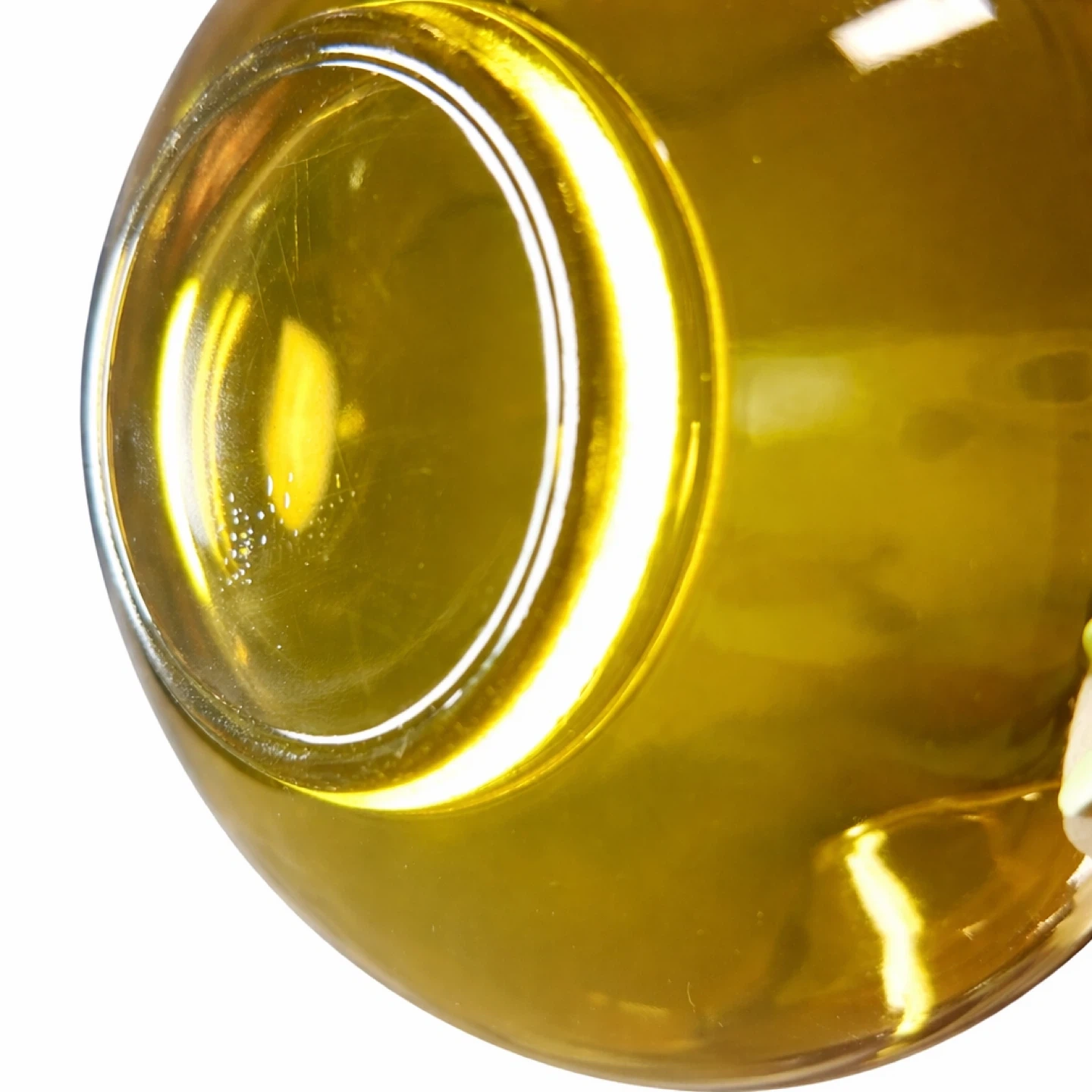
• Base likely ground/polished (the base presents as intentionally finished rather than snapped/pontil-scarred).
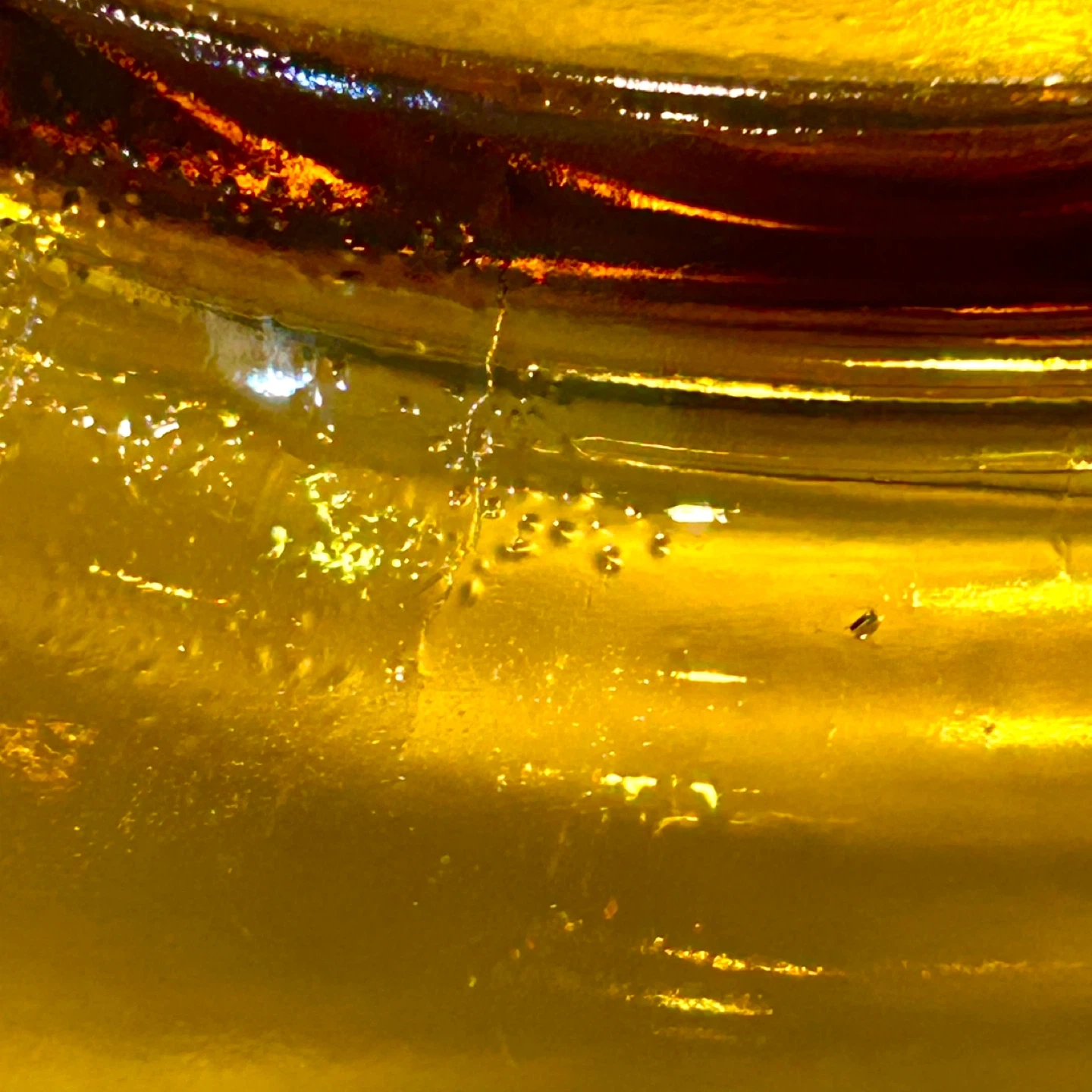
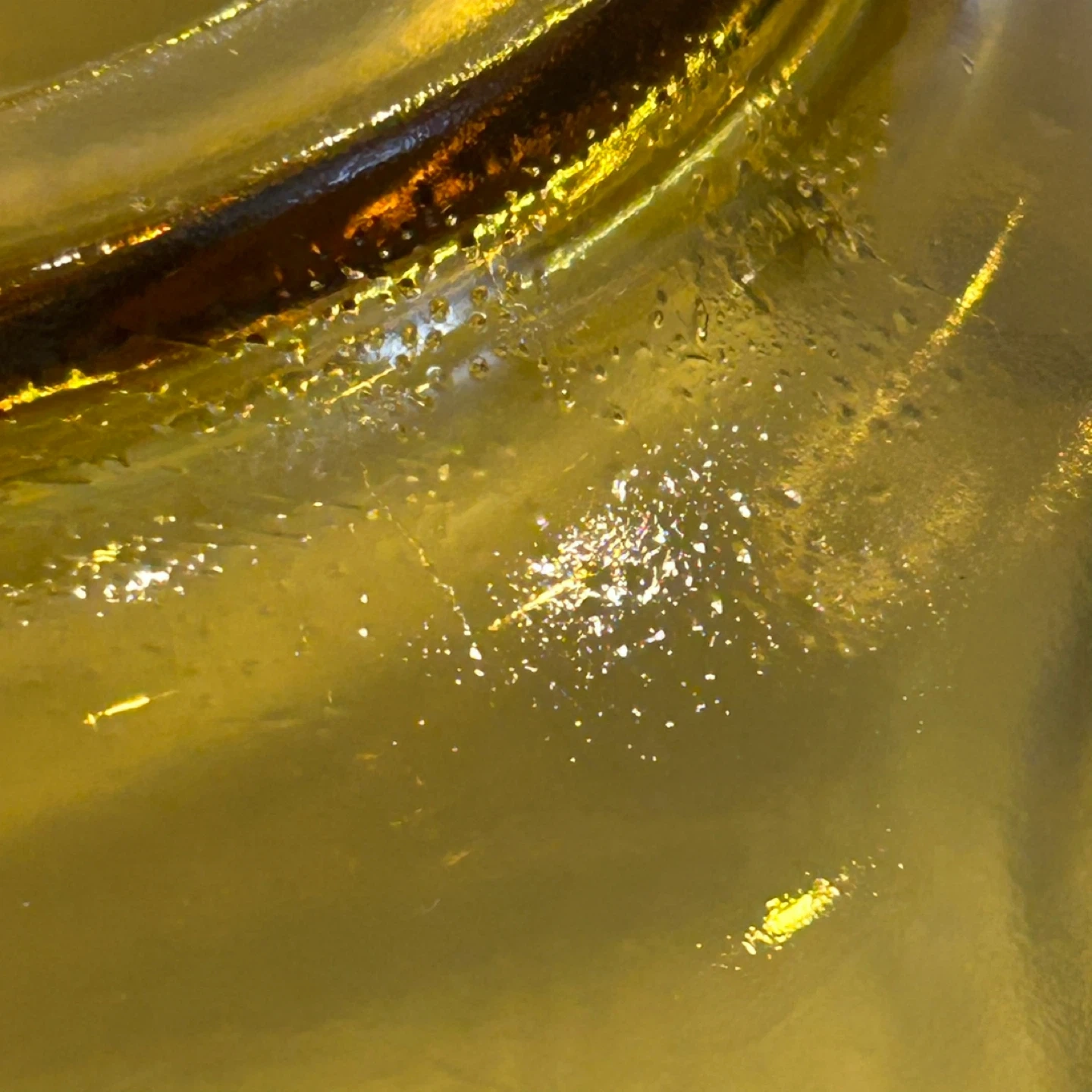
The “pooling” near the bottom aligns with a heavy gather settling during forming, common in hand-blown/mold-blown studio pieces, not classic mass-pressed patterned glass.
⸻
Condition
Excellent vintage condition:
• No chips, no cracks, no scratches, no hairlines (as stated).
• Minor studio-character bubbles/striations may be present (typical and often desirable in art glass).
WHERE TO MEET
SELLER

verified
GiselleInc
Wallance Emerson
 288
28818 reviews
0 chats1 favorites14 views